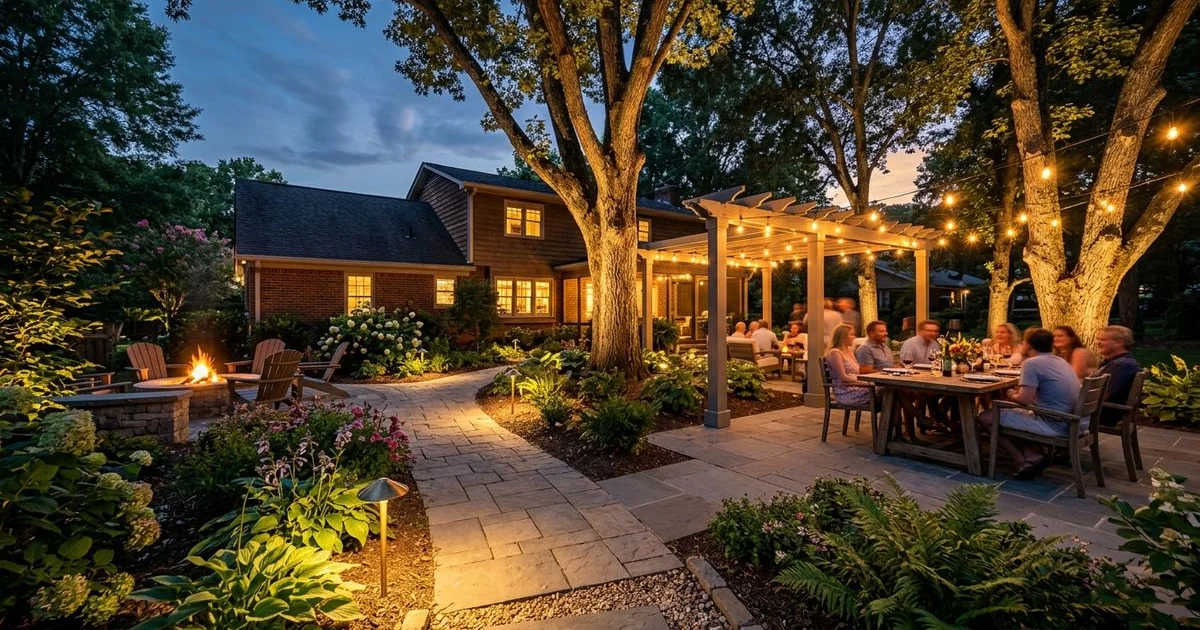
A beautifully designed backyard loses most of its value the moment the sun sets. Without proper illumination, patios become hazards, fire pits sit unused, and outdoor kitchens go dark right when the evening could be getting started.
That lost potential is especially frustrating in the Triangle area, where summer temperatures make the post-sunset hours the most comfortable time to be outside. Landscape lighting fixes this problem and, according to 2025 data from the National Association of Realtors, can boost a home’s resale value by up to 15 percent.
This guide walks through the techniques, equipment choices, and current costs that matter most for properties in Raleigh and surrounding communities like Cary, Apex, and Wake Forest.
Understanding the Three Layers of Light
Professional landscape lighting relies on three distinct layers of illumination working together. Each layer serves a different purpose, and the balance between them determines whether a design feels natural or overwhelming.
- Ambient lighting: The baseline glow for an entire area, typically created by downlights mounted on structures or the combined effect of multiple path lights spread across a space.
- Task lighting: Focused brightness aimed at specific activities, such as the wash illuminating a stairway or the fixtures above an outdoor kitchen prep surface.
- Accent lighting: Feature-focused illumination that draws the eye to compelling elements like a water feature, a specimen tree, or a textured stone wall.
Too much of any single layer throws a design off balance. Excessive ambient light creates a flat, washed-out feel, while overloading on accent fixtures produces a theatrical effect that feels artificial rather than inviting.

Techniques That Work Best in the Triangle
Every technique in the landscape lighting toolbox creates a specific visual effect. Choosing the right mix depends on the features already present in your yard.
Uplighting for Trees and Architecture
Uplighting positions fixtures at ground level and aims them upward to reveal textures and forms that daylight tends to flatten. Raleigh neighborhoods are rich with mature oaks, maples, and pines, making uplighting one of the most impactful options available.
- Narrow beams: A fixture close to the trunk and aimed straight up creates a column of light that emphasizes bark texture.
- Broad angles: A fixture placed further from the trunk and angled wider illuminates the canopy more evenly.
- Multiple fixtures: Several fixtures at varying distances create the most natural and compelling result.
Path Lighting for Safety and Flow
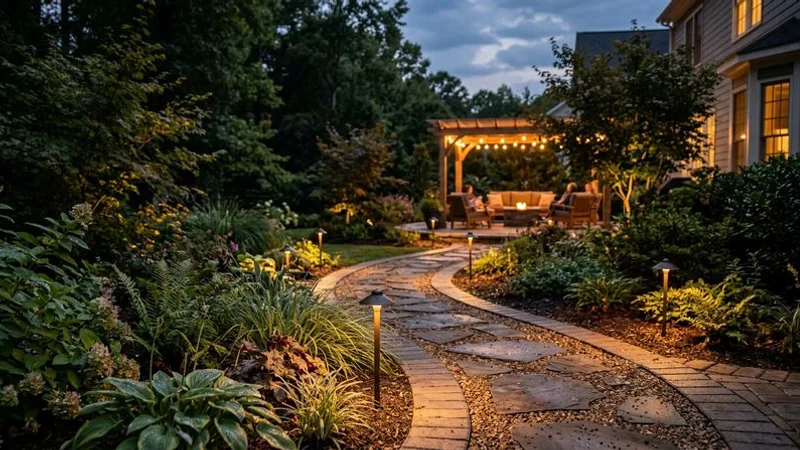
Path lights are the workhorses of any landscape lighting system. They prevent trips and falls along walkways, driveways, and garden borders after dark.
The most common mistake is improper spacing. Fixtures placed too far apart create a runway effect of bright spots separated by darkness, while fixtures too close together produce glare that overwhelms the path. Industry standards recommend 100 to 200 lumens per fixture, spaced six to eight feet apart. Low-profile fixtures sitting eight to twelve inches above grade cast a gentle pool of light without causing glare for anyone seated nearby.
Moonlighting from the Canopy
Moonlighting places fixtures high in trees or on structures and aims them downward, simulating the dappled effect of natural moonlight filtering through branches. The light passes through leaves and creates soft, moving shadows across the ground below.

Fixtures are typically installed fifteen to thirty feet above grade. Experts recommend bulbs with a color temperature around 4000K to replicate the cool, silvery hue of real moonlight. Two or three fixtures in a single large tree can illuminate a substantial section of any backyard.
“Moonlighting creates the most natural-looking illumination in a landscape because it mimics conditions we instinctively find comfortable.”
Grazing and Wall Washing for Hardscape Surfaces
Grazing positions a fixture close to a textured surface, such as a stone retaining wall or brick column, and aims the beam along the surface at a sharp angle. This reveals the irregularities in fieldstone, stacked stone, and bluestone that make hardscape projects so visually interesting. Placing the fixture one to two feet from the wall base creates ideal contrast. Wall washing uses a wider angle from further away for more even coverage.
Matching Lighting to Specific Outdoor Features
Different zones in your backyard call for different approaches to brightness and color temperature.
| Feature Type | Primary Lighting Goal | Recommended Technique | Suggested Color Temperature |
|---|---|---|---|
| Patios & Decks | Safe movement and relaxed dining | Under-cap lighting, recessed step lights | 2700K (Warm White) |
| Outdoor Kitchens | Clear visibility for safe food prep | Under-counter LED strips, overhead spots | 3000K (Bright Warm) |
| Fire Features | Minimal interference with natural flame | Distant ambient dimming, subtle accents | 2700K (Warm White) |
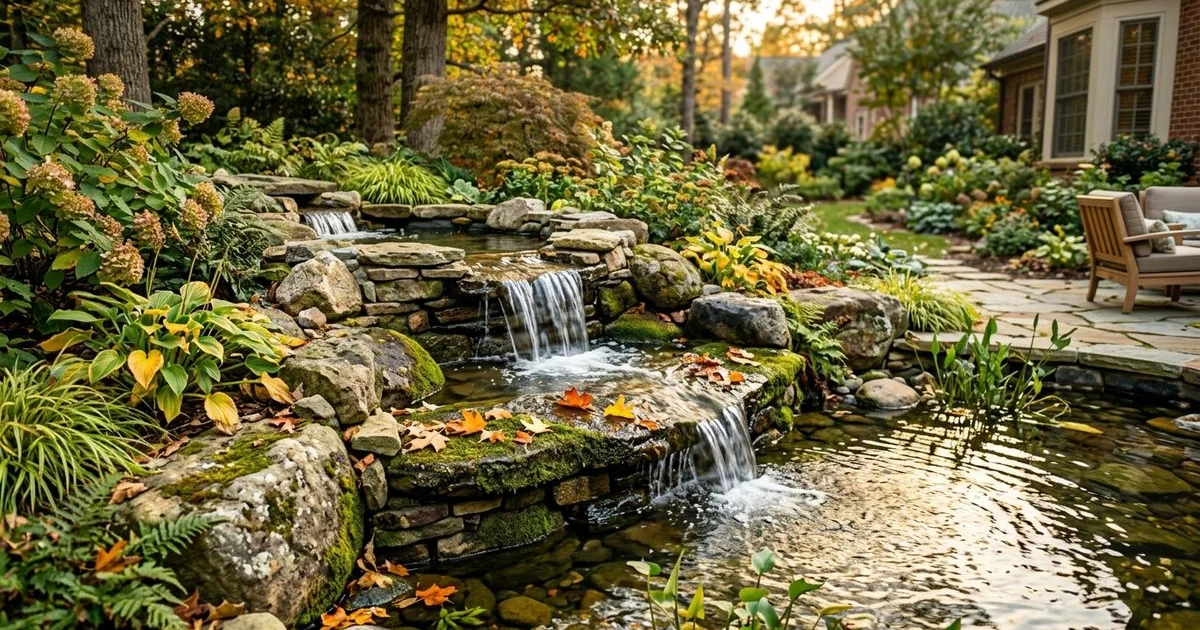
| Water Features | Highlight movement and depth | Submersible LEDs, grazing lights | 3000K to 4000K |
Under-cap lighting on seat walls casts a gentle glow across patio surfaces, while recessed step lights handle transitions between levels. For outdoor kitchens, task lights should always sit on a separate switch from ambient patio fixtures. Fire pits and fireplaces provide their own natural light, so the goal is to minimize competing artificial brightness in the immediate fire zone. Water features respond particularly well to submersible LED lights placed behind cascades, creating a luminous sheet of illuminated water.
LED Technology and Smart Controls
Modern landscape lighting systems run on LED technology exclusively, offering clear advantages over older halogen setups.
- Energy Efficiency: A standard LED landscape system costs just $5 to $15 per month to operate, based on 2025 cost analysis data.
- Longevity: Premium LED chips typically last 40,000 to 50,000 hours, meaning far fewer service calls over the life of the system.
- Utility Rebates: Duke Energy North Carolina has been expanding incentives for outdoor LED installations across residential and commercial properties.
Smart controllers connected via Wi-Fi or Bluetooth allow full management of lighting zones from a smartphone. Systems like FX Luminaire Luxor or Lutron Caseta support scheduling, brightness adjustments, and scene creation for different occasions. Astronomical timers, now standard in most controllers, automatically shift on and off times based on local sunset and sunrise data.
What Professional Lighting Costs in 2026
Based on current local market data, landscape lighting investments typically fall into three tiers.
- Basic Pathway Systems ($3,000 to $5,000): Eight to twelve pathway fixtures covering front walks and driveways.
- Focused Backyard Systems ($5,000 to $8,000): Lighting for a specific patio, key architectural trees, and back pathways for evening entertaining.
- Comprehensive Property Systems ($10,000 to $20,000+): Full property coverage including front yard, side yards, water features, and multi-zone smart controls.
The return on investment makes landscape lighting one of the most compelling outdoor improvements available. Market data from 2025 shows an average ROI of 59 percent, and the extended usability alone, often adding up to six hours of outdoor time per evening, justifies the cost for many homeowners.
Planning Your System at the Right Time
The ideal moment to plan landscape lighting is during the initial design phase of an outdoor living project, when fixture placement and wiring can be integrated into the construction plan seamlessly. Retrofitting an existing landscape is certainly doable, but it requires more creative wire routing and careful work around existing hardscape edges.
A professional design always starts with a nighttime site visit to assess current conditions and identify the most compelling features worth highlighting. For properties in North Hills, Five Points, Bedford, and neighborhoods across the Triangle, Hardscapes Raleigh connects homeowners with lighting specialists who understand the local landscape and know how to make the most of it.
Schedule a design consultation and discover how professional landscape lighting can transform the way you experience your outdoor spaces after dark.